
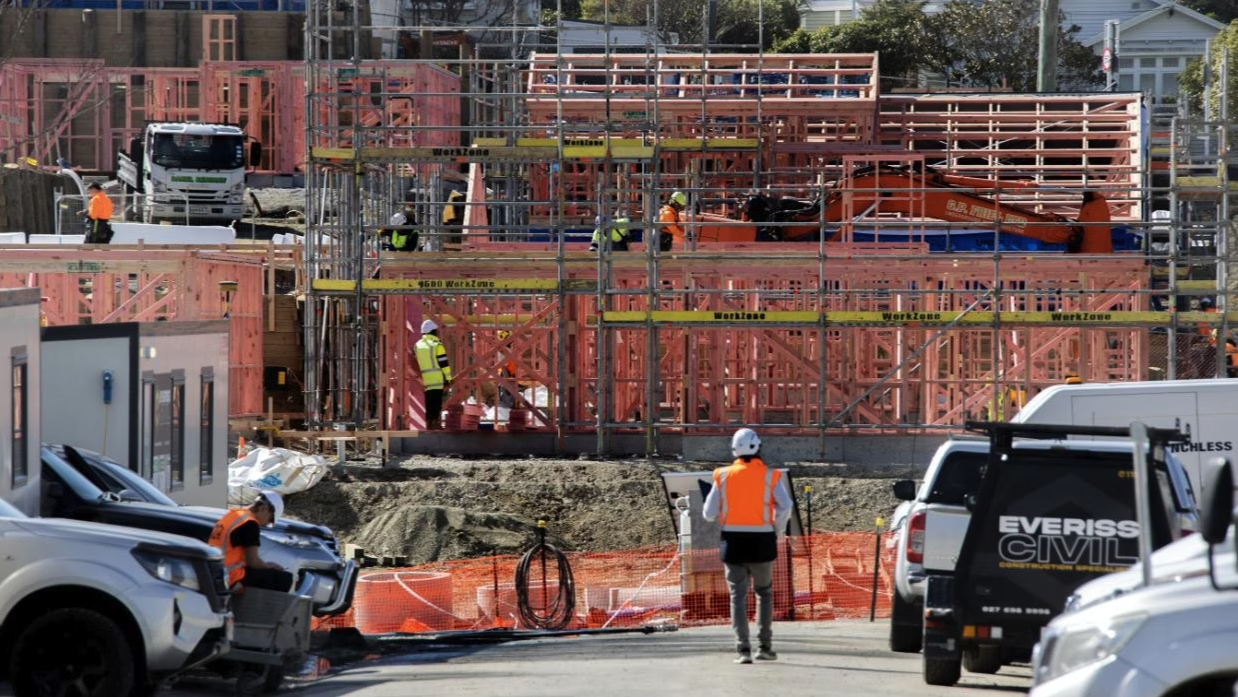
Wellington consents slump signals trouble ahead for housing supply
September 8, 2026
Source: Deborah Morris. The Post, Saturday 5 September 2026.
Building consents have dropped by half around Wellington, prompting warnings that the region could face future housing shortages.
Residential construction across the region has fallen sharply, with new dwelling consents dropping from 3836 in the year to March 2022 to 1893 three years later, according to new analysis from property manager Comprendé and researcher The Property Knowledge.
That’s a decline of about 51%.
The fall has been even more pronounced in Wellington City, where new dwelling consents fell from 929 to just 442 over the same period, a drop of more than 52%.
The latest data used in the Property Insights report showed the five Wellington districts measured — Wellington City, Lower Hutt, Upper Hutt, Porirua and Kāpiti Coast — recorded an average of just 32 new dwelling consents in July.
A building consent today does not mean a house is available tomorrow. There can be a gap between a project being conceived, gaining finance and consent, being built and eventually becoming available to a buyer or tenant.
That meant the sharp fall in consents was potentially less important for today’s housing market than it is for the market Wellington will be dealing with several years from now.
Comprendé founder and chief executive Grant Foggo said the consents being issued now were tomorrow’s housing supply.
“There is a risk of under supply and housing not keeping up. Homes not consenting today could be the homes Wellington is missing when demand comes back.”
Professor Graham Squires, founder and director of The Property Knowledge, said housing supply responded slowly to changes in demand.
“The fall in new dwelling consents is particularly important because housing supply responds slowly,” Squires said. “A reduction in consents today can influence the balance between supply and demand several years from now.”
Lower Hutt, which was ranked the region’s strongest property market in the new Property Outlook Index, had just 24 new dwelling consents in July.
Wellington City, with almost twice the population of Lower Hutt, had 53, Porirua 44, Kāpiti 21 and Upper Hutt 16.
The timing is significant, with Wellington’s property market still subdued. City house prices sit about 30% below their 2021 peak, while buyers and sellers remain cautious.
There is plenty of stock available but no rush from buyers.
In Cotality’s latest release of statistics, property sales had dropped for the seventh month in a row and chief property economist Kelvin Davidson thought the second half of 2026 would likely look the same.
Wellington recorded 524 property sales in July, tied for the fifth-lowest July result in Real Estate Institute of New Zealand’s records. Properties took a median 55 days to sell, the third-longest July result on record.
Foggo said the decline in consents meant the current building pipeline would influence the number of homes available to buyers and renters in the years ahead.
“Wellington isn’t just dealing with today’s housing market; we need to think about what happens when fewer new homes are coming through the pipeline,” Foggo said.
“For landlords, constrained future supply can support rental demand. For buyers, it means the current period of softer prices doesn’t necessarily translate into an abundance of housing in the longer term.”
Foggo said developers were finding it hard to presell units and people were slower to buy off plans.
One of the key questions is will there be enough homes? Wellington City’s population, however, is not expecting any boom – with fewer than 800 extra residents now expected by 2030.
Population growth is better in the other cities – about 14 % is projected for Kāpiti Coast District and Porirua and there’s slightly stronger growth in the Hutt Valley, with both Upper Hutt and Hutt City expected to grow by about 16%.
Stats NZ figures showed nationally there were 40,908 new homes consented in the year ended July 2026, up 21% compared with the year ended July 2025.
That was an increase of just over 7000 homes from the 33,879 consented in the previous July year.
“Annual home consent numbers have continued to strengthen in recent months, with increases in both stand-alone houses and multi-unit homes,” Stats NZ economic indicators spokesperson Michelle Feyen said.
Master Builders CEO Ankit Sharma said consenting delays were also an issue with 68% of builders saying projects were affected by delays.
“We support high standards, but achieving those standards should not require unnecessary cost, delay or inconsistency,” Sharma said.
A clearer and more proportionate consenting system would help builders deliver more efficiently and give homeowners greater certainty about when their project would start, what it will cost and when they could move in.
Deborah Morris
Original article here.